Can multimodal scoring refine postoperative risk stratification and treatment-association framing in ccRCC?
This macOS app presents the manuscript workflow as a compact video abstract: from DX whole-slide image intake to MRSS 2.0 subgroup assignment and postoperative interpretation.
Three evidence streams are fused into one manuscript-aligned score.
The app derives a WSI score from the selected DX slide, combines it with KIPAN AIclinicalScore and six-SNP score, and computes MRSS 2.0 using the prespecified formula and cutoff.
DX Whole-Slide Image
Local path or file upload, restricted to TCGA DX slides for the current workflow.
WSI Score
Derived from native slide inference or communication-efficient 5x upload.
KIPAN AIclinicalScore
Generated from structured clinicopathologic variables through the existing model endpoint.
Six-SNP Score
Composed on device, then merged with the other two modalities into MRSS 2.0.
MRSS 2.0 returns subgroup assignment together with the underlying evidence trail.
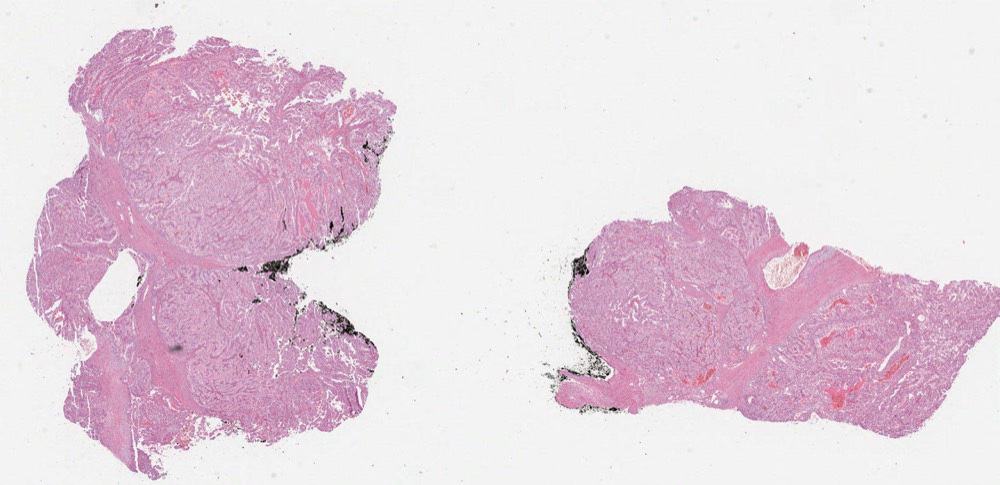
During inference, the selected slide remains visible as a low-resolution preview. The final output shows score, subgroup, contribution structure, and the study-aligned postoperative interpretation layer.
Kaplan-Meier separation is displayed with manuscript endpoint wording and subgroup context.
The validation panel uses recurrence-free interval terminology for surgery-centered prognosis and keeps the treatment interpretation as subgroup association rather than standalone prescribing advice.
Potentially associated with postoperative Sunitinib benefit in the manuscript context.
The result screen emphasizes evidence provenance: model names, WSI source, AI-clinical source, selected slide identifier, formula, cutoff, and inference timestamp.
Kaplan-Meier subgroup separation
The Kaplan-Meier figure is embedded from the manuscript PDF for sharper display in the web iframe.
Limitation: the app should be interpreted as a research or decision-support interface. Final treatment choice still requires clinician review of stage, competing therapies, contraindications, and toxicity profile.
Postoperative ccRCC

